
The Flipped Nutrition Pyramid — and What the Reaction Reveals
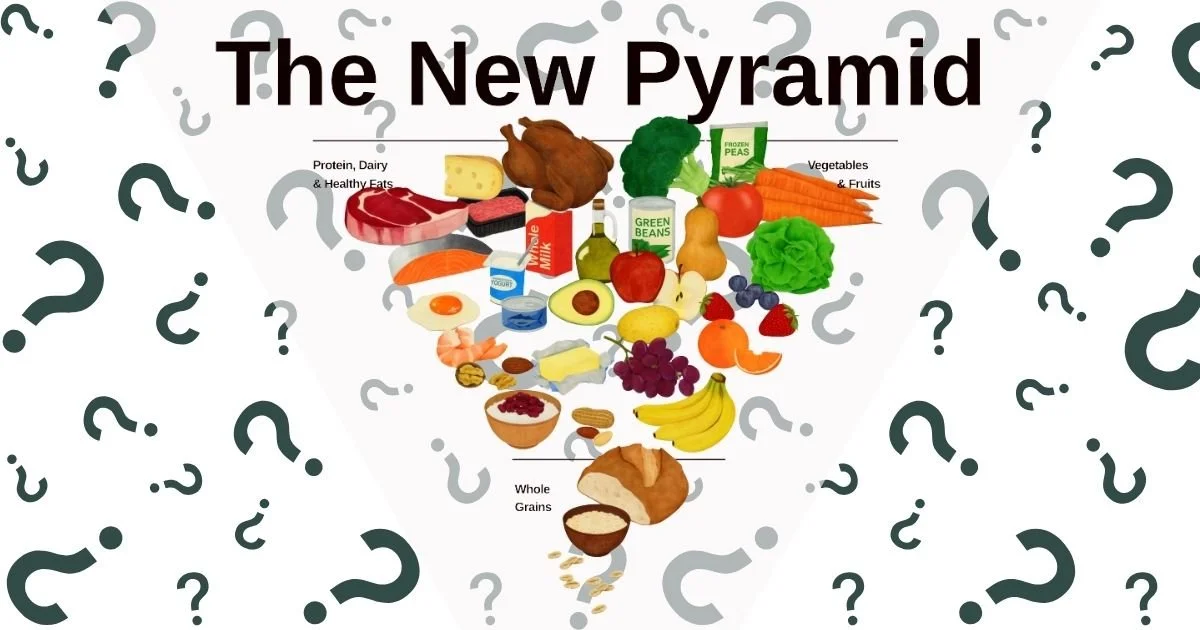
You may have seen the flipped nutrition pyramid that was published just last week - and watching the online response has been fascinating, to say the least.
Over the last few years, a clear rift has been emerging in the wellness world, and this past week felt like a vivid reminder of just how divided we’ve become.
My feed was filled with registered dietitians condemning the new guidelines, while many in the functional medicine space were celebrating them.
Personally, I found the pyramid confusing … Why are we recommending beef tallow? Where did legumes go? And how did butter and grapes end up being recommended as nutritional equivalents?
Suddenly, the two professional worlds I live in were having two extremely different reactions.
Many of my dietitian friends are concerned (rightfully so) about eating disorder messaging, public health implications, and how guidelines get interpreted at scale.
At the same time, my functional medicine colleagues are celebrating improved blood sugar regulation, metabolic health, and a move away from ultra-processed foods.
And honestly? I don’t think either side is wrong.
But I think context matters.
What actually changed nutritionally
If you haven’t seen it yet, the new pyramid is an inverted triangle. It places steak and other animal proteins at the top, along with full-fat dairy, avocados and a wide variety of vegetables. Butter, nuts, and fruit sit in the middle, while whole grains appear at the narrow bottom.
It’s worth noting that this is being framed as a “revision” of the 1992 food pyramid, which famously placed grains at the wide base. In reality, the traditional food pyramid hasn’t been used in decades - the last version was published in 2005, and since 2011, dietary guidance has largely shifted toward MyPlate.
Nutritionally, here’s what stands out:
Greater emphasis on animal protein and full-fat foods
Vegetables positioned as a foundational element
Fewer carbohydrates overall, including whole grains and legumes
No added sugars
At first glance, none of that sounds terrible. Less ultra-processed food? Most of us would probably agree that’s a win.
Where the split really comes from
Functional medicine nutritionist lens
From a functional medicine perspective, these recommendations make sense in many ways.
Many people do struggle with blood sugar instability and could benefit from reducing added sugars.
That said, I still don’t believe we should be afraid of complex carbohydrates — legumes, whole grains, nuts, and seeds provide fiber, protein, minerals, and a steady source of energy for many bodies.
Dietitian / public health lens
From a public health standpoint, the question becomes: does this actually benefit the majority of Americans?
How will this be interpreted?
What nuance will be lost?
What message does it send when steak and beef tallow sit at the base of the pyramid?
We already know most Americans consume a diet heavy in conventionally raised animals, and we cannot deny that our food’s food matters enormously when it comes to nutritional quality, and ultimately, health outcomes.
The missing piece: knowledge ≠ behavior
Nutritional knowledge alone does not change behavior.
Dietary guidelines don’t exist in a vacuum. Our food choices are shaped by farming practices, food systems, corporate lobbying, food costs, time, stress, access to healthcare, and education.
About half of Americans live with a chronic disease related to diet and lifestyle - and while individual food choices matter, systemic factors shape what’s realistically possible.
The reframe: public health vs personalized care
Public health guidelines are designed to reduce harm at scale.
Personalized care asks a different question: what does this body need, in this season of life?
Nutrition is deeply contextual.
Saturated fat, for example, isn’t inherently harmful, but its impact changes in the presence of inflammation, insulin resistance, or poor glycemic control.
How do we capture all of that nuance in a pyramid?